
Peyote Education & History
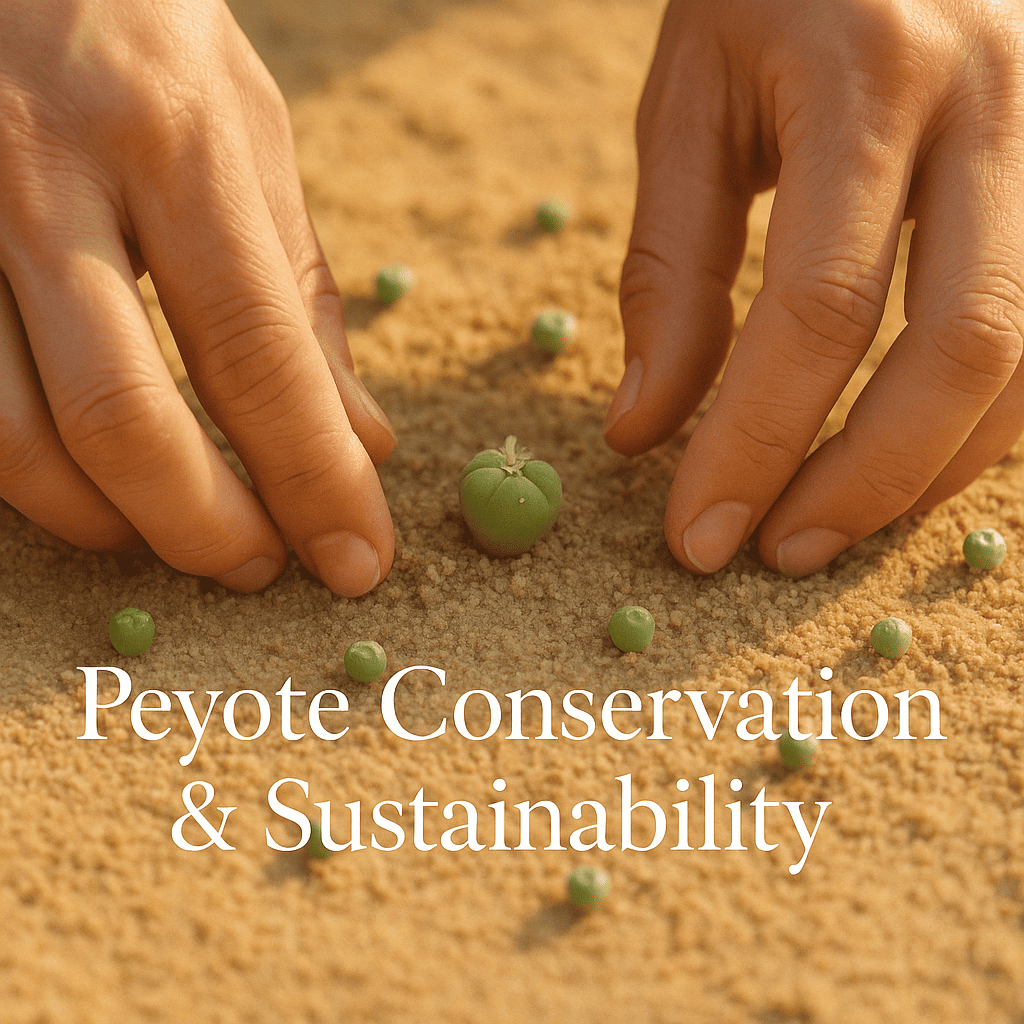
Peyote Conservation Efforts & Sustainability
Oct
As the popularity of peyote (Lophophora williamsii) continues to grow among collectors and researchers, the need for ethical cultivation has never been greater.
This small, sacred cactus — once abundant in Mexico and Texas — now faces increasing pressure from habitat destruction, illegal harvesting, and climate change.
At Peyote Seeds Farm, we’re committed to preserving peyote through sustainable propagation, education, and responsible sourcing.
🌵 Why Peyote Needs Protection
Wild peyote grows slowly — often taking 10–15 years to mature.
This makes natural populations extremely vulnerable to over-harvesting.
Unregulated collection from the wild has caused peyote to become locally endangered in some regions.
Main threats include:
-
🚜 Land clearing for agriculture and urban development
-
🪓 Illegal harvesting for commercial sale
-
🌡 Climate stress affecting desert microhabitats
-
🦠 Unsustainable trade from wild populations
🌿 Sustainable Peyote Cultivation
The most effective way to protect peyote is through nursery propagation — growing from seed under controlled conditions.
This approach ensures both legal compliance and conservation ethics.
At Peyote Seeds Farm, we:
-
🌱 Use only greenhouse-grown parent stock
-
🧪 Test seed batches for viability and purity
-
📦 Offer Lophophora Williamsii Seeds grown without chemical fertilisers
-
🔁 Reinforce the cycle of sustainable replanting
👉 Shop sustainably: Lophophora Williamsii Seeds
🪴 Benefits of Cultivated Peyote
| Benefit | Description |
|---|---|
| Reduces pressure on wild populations | Every greenhouse-grown plant saves a wild one from collection. |
| Ensures genetic preservation | Propagation keeps diverse peyote genotypes alive. |
| Allows legal, traceable trade | Greenhouse-grown seeds are compliant with international standards. |
| Educates future growers | Promotes ethical horticulture and cultural respect. |
💚 Ethical cultivation ensures that peyote remains available for future generations, not lost to short-term exploitation.
🧬 Conservation Partnerships & Awareness
Global conservation groups and Indigenous communities are increasingly working together to protect peyote’s natural range.
By supporting seed-based cultivation, growers contribute directly to species recovery and education programs that teach sustainable practices.
Read also: Difference Between Wild and Cultivated Peyote
🌍 What Growers Can Do
You can help protect peyote by:
-
Buying only cultivated seeds or plants — never wild-harvested.
-
Using ethical suppliers with transparent sourcing.
-
Learning proper care and propagation techniques.
-
Supporting organisations that protect desert ecosystems.
-
Sharing knowledge about sustainable growing.
Discover our Lophophora Guide for detailed growing instructions.
🌾 The Future of Peyote Conservation
Sustainability isn’t just a policy — it’s a responsibility shared by everyone who values this sacred plant.
Through education, ethical trade, and scientific collaboration, we can restore peyote’s place in the wild and ensure its continued cultural significance.
“To grow peyote responsibly is to honour both the earth and its people.”
❓ Frequently Asked Questions
1. Is peyote endangered?
In some regions, yes — wild peyote populations have sharply declined, especially in Texas and northern Mexico.
2. How can I grow peyote sustainably?
By using nursery-grown seeds, proper soil, and greenhouse conditions to avoid wild harvesting.
3. Is it legal to sell peyote seeds?
In most regions, yes — because peyote seeds contain no psychoactive compounds.
4. Can cultivated peyote be used for conservation?
Yes, greenhouse peyote can be reintroduced to support genetic diversity and ecological balance.
