
Legality & Ethics
Why Sustainable Peyote Trade Matters
Oct
The global demand for peyote (Lophophora williamsii) is rising — not only among collectors and researchers, but also within the spiritual and botanical community.
Unfortunately, wild peyote populations are in decline due to overharvesting and habitat destruction.
That’s why sustainable trade isn’t optional — it’s essential.
At Peyote Seeds Farm, we believe in a model that balances education, conservation, and ethical commerce to protect peyote for generations to come.
🌿 1️⃣ Understanding Peyote’s Ecological Importance
Peyote is more than a spiritual plant — it’s a keystone species in its desert ecosystem.
It helps maintain soil health, supports pollinators, and plays a vital role in desert biodiversity.
Unfortunately, slow growth (10–15 years in the wild) makes peyote highly vulnerable to overcollection.
Without sustainable cultivation, wild populations could vanish within decades.
👉 Learn about current efforts in Peyote Conservation & Sustainability
🌵 2️⃣ The Problem with Wild Harvesting
For years, wild peyote has been collected illegally for sale or unregulated use.
This practice:
-
Damages natural ecosystems
-
Disrespects Indigenous sacred lands
-
Threatens species survival
-
Reduces biodiversity in fragile desert regions
Ethical nurseries like Peyote Seeds Farm provide a legal, cultivated alternative to this unsustainable trade.
🪴 3️⃣ How Sustainable Peyote Trade Works
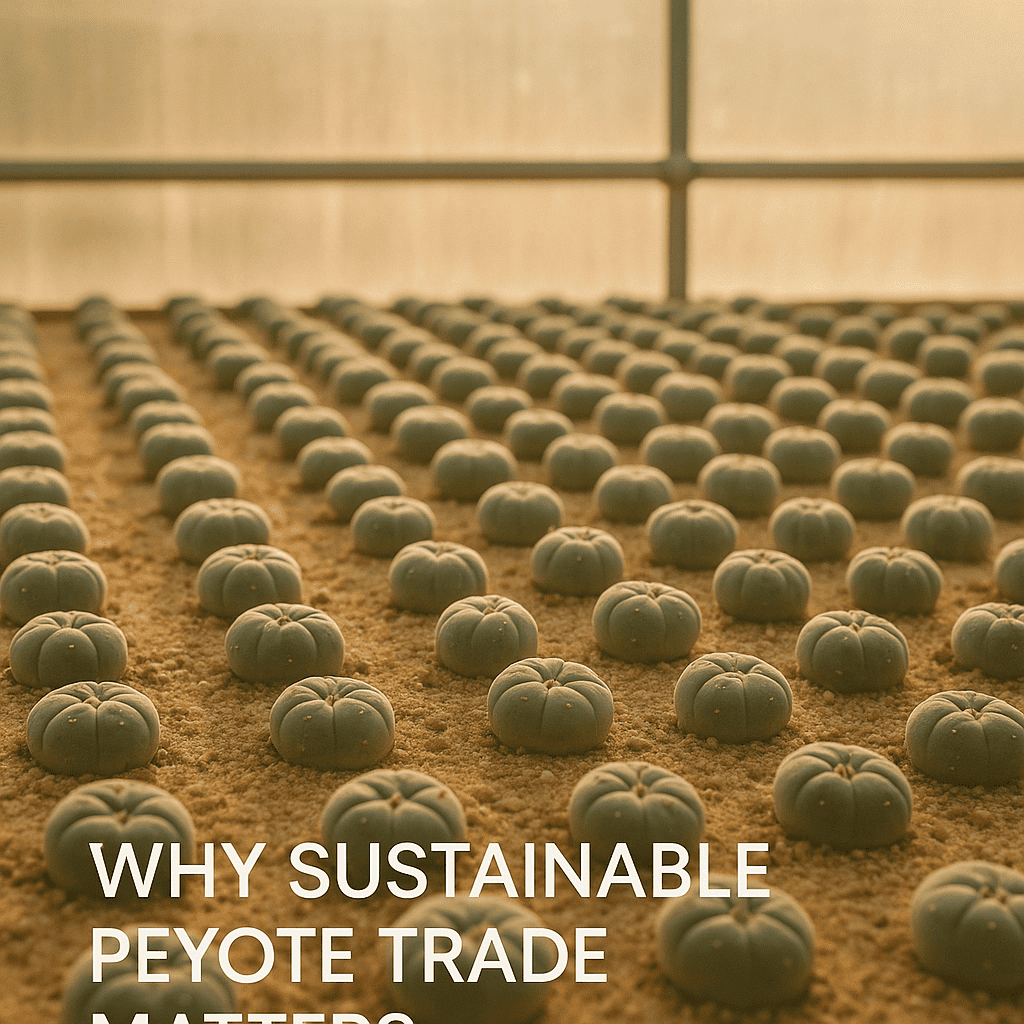
Sustainable peyote trade means every seed and plant can be traced to a legal, greenhouse-grown source — not the wild.
| Practice | Description |
|---|---|
| Cultivated Seeds Only | All seeds are propagated under controlled nursery conditions. |
| CITES Compliance | Trade follows global plant protection conventions. |
| Transparency | Every batch has traceable documentation. |
| Replanting Initiatives | A portion of proceeds supports desert regeneration. |
At Peyote Seeds Farm, we maintain strict documentation and collaborate with certified nurseries.
🌎 4️⃣ Supporting Indigenous and Local Communities
A sustainable peyote trade also respects the cultural heritage tied to this sacred cactus.
By sourcing responsibly, we help:
-
Reduce exploitation of Indigenous harvesting grounds
-
Promote community-based cultivation projects
-
Encourage traditional ecological knowledge sharing
Ethical commerce should never replace spirituality — it should coexist with respect.
👉 Read next: Ethical Peyote Cultivation and Cultural Respect
🌱 5️⃣ Benefits of Sustainable Peyote Propagation
Sustainability doesn’t just help the environment — it improves quality and reliability for growers.
Advantages:
-
Consistent germination rates
-
Healthier, disease-free seeds
-
Legally compliant trade
-
Contribution to global conservation efforts
Every cultivated peyote seed sold represents one less plant taken from the wild.
🧾 6️⃣ Peyote Seeds Farm’s Sustainability Commitment
Our long-term goal is to create a closed-loop system where each cultivated peyote helps fund future replanting efforts.
We follow strict ethical standards:
-
No wild harvesting — ever
-
100 % traceable nursery-grown seeds
-
Carbon-neutral packaging & shipping
-
Education-driven customer community
This way, every purchase supports both ethical cultivation and global preservation.
❓ Frequently Asked Questions
1. What does “sustainable peyote trade” mean?
It refers to the legal, greenhouse-based cultivation and sale of peyote seeds that don’t harm wild populations.
2. How can I ensure I’m buying sustainably?
Buy only from suppliers who disclose seed origins and comply with conservation standards.
3. Does sustainability affect peyote quality?
Yes — cultivated peyote is often healthier and genetically stronger than wild-harvested plants.
4. Can I support conservation without growing peyote?
Absolutely — by sharing awareness or donating to verified replanting programs.
