
Cactus Care & Maintenance
Preventing Root Rot in Lophophora & Other Cacti
Oct
Root rot is one of the most common causes of cactus loss — especially in slow-growing species like peyote (Lophophora williamsii).
Because these plants evolved in dry, mineral soils, even small watering mistakes can turn their root systems mushy and lifeless.
At Peyote Seeds Farm, we help collectors and cultivators prevent this by using proper soil structure, drainage, and care discipline — the same practices used in professional greenhouses.
🌿 What Exactly Is Root Rot?
Root rot occurs when the roots remain in wet, airless soil for too long, creating ideal conditions for harmful fungi such as Phytophthora and Pythium.
These microorganisms attack the roots, leading to blackened tissue, foul smell, and eventual collapse of the plant body.
💧 Early Warning Signs
Watch for these red flags:
-
Yellowing or translucent skin near the base
-
Mushy or soft texture when pressed
-
A sour, unpleasant odour
-
Sudden wilting despite moist soil
-
Roots turning black or disintegrating
If any of these appear, stop watering immediately and prepare for rescue treatment.
🪴 How to Prevent Root Rot Before It Starts
✅ 1. Use the Right Soil Mix
A cactus’s first defence is drainage. Use a mineral-dominant mix with:
-
40 % pumice or perlite
-
30 % limestone grit
-
20 % sterilised cactus soil
-
10 % coarse sand
👉 Full recipe here: Best Soil Mix for Growing Peyote Cactus
✅ 2. Water Sparingly and on Schedule
Follow the “soak and dry” technique: water deeply, then let the soil dry completely before watering again.
During dormancy (winter), keep the soil nearly dry.
💡 Read: How to Water Peyote and Cactus Plants Properly
✅ 3. Ensure Proper Pot Drainage
Always plant in terracotta or clay pots with multiple drainage holes.
Avoid decorative plastic pots without airflow — they trap moisture and suffocate roots.
✅ 4. Regulate Temperature & Airflow
Keep peyote in warm, ventilated spaces (25–30 °C).
Still air encourages fungal growth, so ensure gentle cross-ventilation in your greenhouse or grow area.
👉 Setup tips: Ideal Greenhouse Conditions for Peyote
🧪 How to Treat Root Rot (Step-by-Step)
If caught early, recovery is possible:
-
Unpot the plant and gently shake off all soil.
-
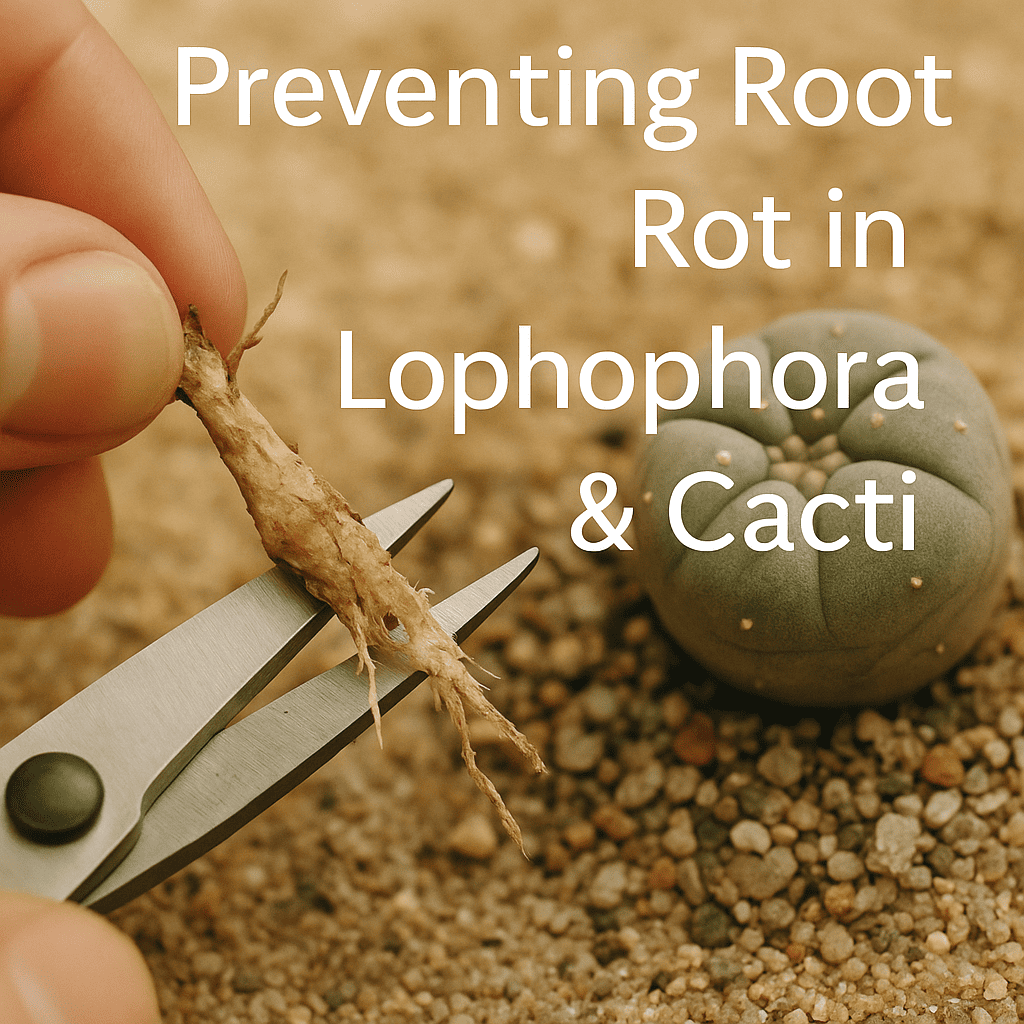
Inspect roots — trim away black or mushy sections using a sterilised blade.
-
Disinfect with a 1 % hydrogen peroxide rinse or sulfur powder.
-
Air-dry for 5–7 days in indirect light.
-
Repot into fresh, dry mineral soil.
-
Do not water for another 10 days — then resume normal care.
If the root loss is severe, you can graft the peyote head onto a healthy stock plant (see How to Graft Lophophora onto Trichocereus).
🌸 After-Care for Recovered Plants
-
Keep humidity below 50 %.
-
Water only when new root tips appear.
-
Add a light dusting of cinnamon or sulfur around the base to deter fungus.
-
Gradually reintroduce sunlight.
Consistent monitoring for two months is key to full recovery.
❓ Frequently Asked Questions
1. Can root rot spread to nearby cacti?
Yes — spores can travel through shared soil or water. Always isolate infected plants.
2. Should I use fungicides?
Mild natural agents (sulfur or neem extract) are safer than chemical fungicides for peyote.
3. Can grafting save a rotted peyote button?
Yes, grafting the healthy top onto a new rootstock often rescues the plant.
4. How can I avoid this long-term?
Stick to mineral soil, minimal watering, and strong airflow year-round.
